
Wednesday, September 12, 2012
Prior to tonight's 1st pitch, the Red Sox held a moment of silence to honor Harvard baseball coach Joe Walsh
Prior to tonight's 1st pitch, the Red Sox held a moment of silence to honor Harvard baseball coach Joe Walsh.


Thursday, September 6, 2012
Morgan Brown's Amazing Eulogy - Thanks Morgan
I would like to ask for two indulgences. One is that I have brought up a few notes, I
am going to try not to refer to them, as I know Coach would not normally
approve, but there is so much to say, and I think given the circumstances he
would be ok with it.
Secondly, as a player, I always felt strengthened by my
teammates, and there are many of them here today. Coach created a family across his teams, year
to year, and decade to decade, and I would like to ask all of those here today
who played for Coach Walsh to stand up.
I know I speak for us all when I say that we owe Coach a
great debt. He indelibly changed all of
our lives, we wouldn’t be who we are, or where we are, without him. He will always be with us, and he has
impacted us all, in ways we only partly understand now.
Thank you.
I should introduce myself.
I played for Coach Walsh at Harvard from the fall of 2002, to the spring
of 2006. I came to Harvard as a walk-on,
and I was intimidated by the mere thought of going down across the river with
the recruited players and working out, or approaching the coaching staff about
trying out. Yet, when I arrived on
campus and first got the guts up to give Coach a call, he answered with his
traditional friendliness and enthusiasm, as if he had been waiting all day for
my call, and I was old friend. He
quickly invited me down to drop by and see him in the office and then to get
out on the field with the “rest” of the team.
He offered me a totally fair opportunity and I could see in his eyes, he
genuinely hoped it would work out for me.
After being in his office for about 5 minutes, I realized this was
someone who would always be supporting me, on and off the field. Of course, I wasn’t in the office for only 5
minutes, that doesn’t happen, while I am sure he was busy, he talked to me
about New Hampshire for another half hour before sending me out to join the
other players on the field.
It worked out well for us both. I made the team, and went on to start at
shortstop for the majority of my career, was elected captain, and was twice
named All-Ivy, among other awards. He made me better, and want to be better,
every day.
Even though I came from a very small public high school in
rural New Hampshire, I remember I used to rib Coach about how he could have
“missed” on me during the recruiting process.
He said he didn’t miss, it was very easy to hit .450 in high school if
you had two pigs and a sheep playing the outfield, and he wasn’t sure that would
translate very well to college baseball.
I went on to play briefly professionally, and coach
encouraged that, but perhaps where he was most supportive was in my career away
from baseball, and in keeping some connection to baseball while doing something
totally different.
I spent a year living in India shortly after college. Towards the end of the year away from home, I
recall a day when I was quite homesick.
I wandered into a bookstore to see if there was anything there that
might remind me of home. I found a
picture book, entitled simply “USA”. I
flipped it open. It was produced by a
German company, and as I flipped through it, I noticed mostly images of my
country without people. National
Parks. The Golden Gate Bridge. Niagara Falls. Then I flipped another page, and there, starting
out at me, as Father Dave mentioned before, was that immortal smile, stretched
ear to ear. While most other people
getting gifts when I returned got something Indian - a piece of jewelry,
spices, or something else - Coach got a book, about his own country, with his
own face in it. We had a great laugh
about it, and I was always honored that for the last 6 years, that book sat on
his baseball trophy case in his office amidst his other plaques and awards.
Coach Walsh was a very kind and generous man, who was always
consistent in the way he treated everyone, no matter your station in life. Whenever you met him, called him, or walked
into his office and asked him, “How are you?” he would immediately, and
invariably, deflect the question and say - with supreme interest and concern -
“More importantly, how are YOU?”
Once that was out of the way, you were likely in for several
hours of conversation and stories. These
stories are too numerous to recount here, but I am sure many spring to mind for
all of us. Coach had a unique way of
speaking, and he spoke the truth with an unscripted brilliance on a daily
basis, whether to the team, a recruit, a sportswriter, the American Baseball
Coaches Association Convention, or even - this is true - a wrong number dialer
who called his office. Sometimes it
would take us a little while to figure out exactly what he had been right
about, but he was right.
Coach loved the role of the underdog, and his tremendous
confidence, desire, faith, and will to succeed, and to challenge yourself to
the greatest extent possible, rubbed off on us.
He was known to annually not only schedule teams like Miami, UCLA, and
Oklahoma State, but regularly to beat them.
He led a non-scholarship Division 1 school from the Ivy League to a
national ranking in the top 25. If you
wouldn’t schedule his team, he would call the head coach and say “You are
ducking us, you are scared, why won’t you schedule us?” More often than not, he got his wish, and if
he didn’t feel like his team was getting adequate respect before the game, he
would call the opposing college’s student radio station to drum up more
interest, and talk up his team. He had
tremendous faith, and belief, in each one of us. How could you not want to play
for a guy like that?
Coach always supported people being involved in baseball,
from inviting walk-ons to tryout, to calling teams in the Cape League to take
players from rival Ivy League schools because he thought they deserved it, to
letting other teams from colleges to little leaguers use our field and our
equipment because he knew how lucky we were.
He always supported access to the game.
In the past few years of being his roommate on the road
during the season, I have gotten to know another side of Coach that I didn’t
know as a player. Coach cared deeply
about his players, we were like an extension of his family, our concerns were
his concerns, he would be up at night worried about the health of player, or a
player’s family member. He would spend
hours talking to former players on the phone, about their jobs, their children,
and other things. He would get on the
phone to help anyone who walked into his office, he was everyone’s biggest fan
and our best character reference. He
would flip through his rolodex until he had exhausted it; whether to get a
player a job or an internship, a placement on a great summer team, … or a
girlfriend.
I kept learning things not only from Coach, but about Coach,
even over these last few weeks. Some of
you might not know this, but Coach starting texting, it’s true! In fact, just
last week, he called me, left a message, and told me to “text him back”. During spring break, my van got a little
carried away and recorded a dance video to a teenage pop song. I requested that the players not post this on
the internet during the season, not only for their sake, but because I thought
Coach would remove my head from my body for letting it happen when he saw
it. After the season ended, the guys
told me they were going to post it, and they did. Coach definitely knew about YouTube, and sure
enough, early Monday morning my phone rang.
“Did you see the video?” I thought
about playing dumb, but I was caught.
“The ‘Call Me Maybe’ video! Your
van!”. Me: “Yeah, what did you think?”
Coach: …..“It was AWESOME! I checked the lyrics, and they are fine! It’s great!” I was a little surprised, but very much
relieved at his reaction, and I spent the summer fielding proud phone calls
from his recruiting trips to places like Atlanta, Georgia, and Jupiter,
Florida, telling me how many other coaches and passers-by would come up and
talk to him about it.
I have known Coach not only as my coach, but as a humble and
caring man, loving husband, and devoted father, who gave so freely of himself,
and his time. He loved baseball, his
players, and the game, and perhaps the only thing he held against it, was that
it took him away from Sandra, and his daughters, more than we would have liked,
because they were truly the loves of his life.
He lived what he preached right until the end. He even had a dark sense of humor about this
very moment. He used to talk about how
he wanted to be remembered, “when they put me in the box”. Well, Coach, you did it, we remember you as
the man you wanted to be, and the man you tried to teach all of us to
become.
In the end, Coach never ducked anyone
or anything, he welcomed challenges head on, and for all of us here today, who
had the honor of knowing him, we are much better for it.
“Go after what you love while you can; there
will be plenty of time for pushing pencils in the concrete caves. Be loyal, have fun, work hard. Play the game the right way. Hustle.
Have faith in yourself and your teammates. Tell stories, and be worthy of stories told
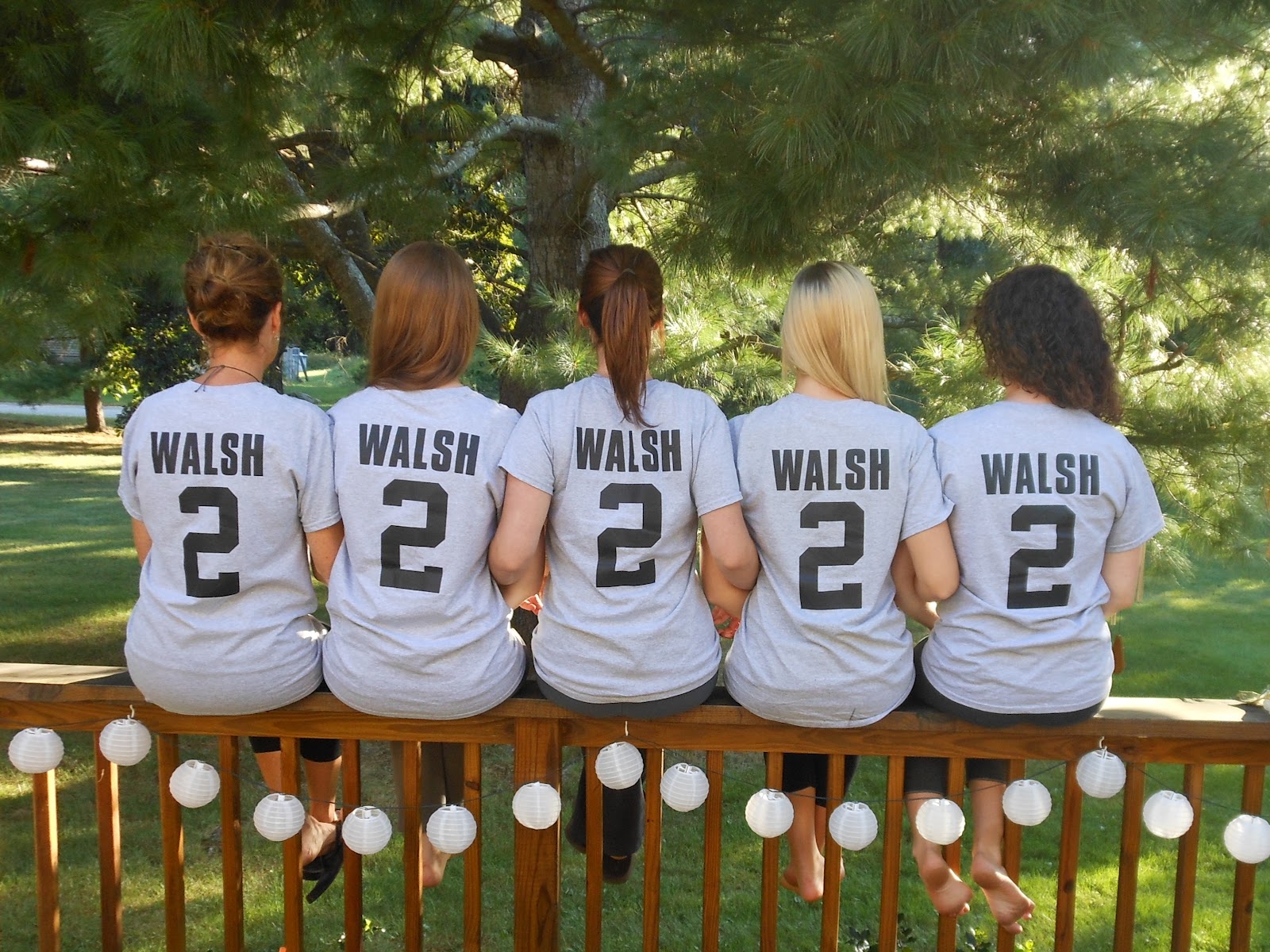
about you…” –Walsh, 2

Monday, September 3, 2012
Friday, August 31, 2012
Scot Hopps '01 Remembers Joe
I’ve got so many thoughts, but so few words. I have had so many emotions, but I’m afraid to share them. As far as I’m concerned, Coach Walsh should still be here – coaching young men and shaping lives.
Looking back on college, it’s the pinnacle of selfishness. I’ve got two beautiful daughters now, which makes me sob with empathy for Coach’s family, my girls make me truly understand what is important. But as an 18-22 year old, at a wonderful school, blessed with the opportunity to play sports and be social and live in a great city, I was consumed with myself. I missed out on things . . .
I thought Coach was consumed with baseball, I thought he was missing the bigger picture, I thought he must have had blinders on. That’s not to say I didn’t appreciate him – he was singlehandedly the most important person associated with Harvard that I (and scores of other young men) knew. No professor will be missed as much as Coach. No advisor, no proctor, no administrator. He invested more time in us than anyone with a doctorate could fathom. He invested more time and effort in his craft than entire departments combined. No exaggeration.
But I missed a lot. I thought that baseball consumed him and I thought he was missing out on what was important. Everyone knows his famous “Concrete Cave” rant, and I figured everyone dismissed it. It was endearing in a Peter Pan way, but everyone knows that for the most part, people grow out of baseball and move on with life. Coach, how could you be so blind?
Have I mentioned that I’m selfish? But over time that has grown into a lot of introspection (who else would I focus on?). Who was the one with blinders? Joe Walsh knew more about my family than I bothered to pay attention to. His first question, literally his first question after “Hey Scotty!” was, “How’s your dad?” He spent more effort in 15 minutes on the phone getting to know the family of a kid who had no chance of attending Harvard or playing baseball beyond a 8th grade level than I did in four years getting to know his family.
I was convinced that Coach was a bit mad. Devoted, passionate, sincere, yes. But nuts. He slept on his couch or the floor most nights. He spent all of his waking and sleeping hours less than 90 feet from his baseball teams. As far as I could tell, this came at the expense of his family. Did I mention I was the one with blinders on? I love re-telling the story that was passed down through generations of Coach Walsh players: “. . . and I’ve got three daughters that I haven’t seen in weeks!” A Suffolk player replies: “Coach, don’t you have four daughters?” Coach’s reply: “You might be right!”
I’m baffled by what I missed, and what I find most fascinating and most memorable about Coach Walsh posthumously. I was tricked. In four years playing for him, in eleven years following the team since, I thought baseball was number one. I thought everything else came when it could. Taxes, car repairs, family. Once baseball was done. Listening to his beautiful family, his quartet of incredible daughters humbled me. What I will remember most from his funeral is what I learned about his family. What I neglected to invest myself in learning as a selfish college kid. What I was too busy to think about as an alumni. What I now am so acutely aware of as a father. His daughters not only felt, but knew that they were number one in his life. His wife knew that she was paramount in his world. I’ve never been more proud to know Coach Walsh than when I learned that I’d been duped.
Everyone who talks to Coach Walsh feels like he or she is his utmost priority. How can he possibly achieve that outcome when he clearly valued his family above all else? How could he teach his girls so many valuable lessons, how could he raise such astonishing women when he spent every moment in uniform. Maybe it wasn’t all my fault, I assume everyone who plays for him feels this way – but his passing made me realize that our team, that all of his teams were not the only thing in his world. Here was a man who invested everything into me, who learned about my family and paid attention to my life after baseball, and I never once asked him about his family. I never once tried to peel back his layers and understand that baseball and his players were only one of his passions. Actually, 6th and 7th on his list after his wife and four daughters.
Have I mentioned that I’m selfish? But I’m not blind. Coach Walsh, in your incredible way, you continue to teach me. If I can aspire to one thing, it is to have my family regard me as half the man your family knew you as. It is to raise my daughters to have half the strength your team of girls has. This tragedy brought things rushing into perspective for me. Coach Walsh didn’t care all that much about baseball. He cared about people that cared about baseball. He cared about parents that cared about baseball. He was first and foremost the most attentive and engaged person I have known or will know. He didn’t care if you hit .500 or .050, he cared how you played the game of life. Did you approach it with vigor, with passion? When you woke up in the morning, did you yell out “Let’s play two!”? Did you inspire others to be better each day?
I wish I had learned more about him in the time we had together, but one reality gives me peace; his family sincerely knew that they were the most important thing to him. And that makes me love and respect the man more than I ever could for baseball alone. Coach Walsh, I will miss you. I will think of you. But most importantly, I will put into action lessons I have learned from you during our time together and now our time apart. If I can emulate one thing, it has got to be holding my family up, at the pinnacle of my world, and ensuring that they know it every day.
Sandra, Tory, Holly, Katie, and Kasey, thank you for sharing your husband and father with us. I can’t speak for everyone, but I know my life is different – my life is better and I am a better man because of him. I don’t know that there are many people that can impact as many lives in such a positive was as he has. I’m not nearly as selfish as I was 11 years ago, and I hope I can find ways to learn more about you all, support you, and follow your respective journeys as you put your mark on the world.
Monday, August 27, 2012
Suffolk University Alumni Magazine

His head slightly bowed, Joe Walsh unhooks his thumbs from his belt and makes the slow walk from the dugout to the pitcher’s mound. On a cloudless spring day, it’s the Harvard University baseball coach’s second trip there, and with a wave of his right arm, he signals the end of starting pitcher Eric Eadington’s day. Three outs away from a win against Ivy League division rival Princeton University, Harvard’s 3-0 lead has evaporated into a 3-3 tie, and Walsh isn’t taking any chances. Coming off a staggering 24-game road trip–and 3-21 record–Walsh is eager for a win back home at O’Donnell Field in Cambridge which, he hopes, can “get things rolling a little bit.”
Unfortunately, things roll off the rails in rapid succession: two
pitching changes, a squib of a hit to load the bases, and then an
otherwise catchable fly ball lost in the blinding midday sun. Just like
that, Princeton has a 5-3 lead, and the Harvard Crimson soon endures
another crushing defeat. As the Princeton players exchange
congratulatory high-fives (and the PA system inexplicably blasts Hootie
and the Blowfish’s sappy song “Let Her Cry”), Walsh rallies his players
for the second game of the day’s doubleheader.
“There’s different ways of doing it,” says Walsh of coaching his team
through a losing streak. “Sometimes you’ve got to get in their faces a
little bit, sometimes you have to hug them. We’ve been trying
everything. We’ve had our injuries, but everybody else has, too. We’ve
just got to start playing some baseball.”
Harvard will wait another day for their first home victory of the
season, captured in dramatic fashion with a walk-off grand slam against
Cornell University. More than many, Walsh understands the capricious
nature of the game, and the ways it can humble even the most seasoned
players.
“A Recipe for Winning”
For most of his 57 years, Walsh has lived a life between the lines,
buoyed by an evergreen love for the national pastime. To watch him now
on a baseball diamond is to see the working-class Dorchester kid who
inherited his father’s love of sports and spent endless weekends
shagging flies and peppering line drives across Boston’s sandlots. “In
my neighborhood, either you got in trouble or you played ball,” recalls
Walsh. “And, for the most part, I played ball.”
As he gives constant, steady instruction to his players, one
understands his successes first as a pitcher at Suffolk, and later as
the New England Division III Coach of the Year that revived the Rams’
baseball program when he took over in 1982, leading his teams to a
218-167-1 record.
He’s in his 16th season at Harvard, where he earned his 500th win as a
collegiate head coach in 2007, a testament to both his ability and
longevity. In 2009, he was inducted into Suffolk’s Athletic Hall of
Fame.
He’s in
 his 16th season at Harvard, where he earned his 500th win as a
collegiate head coach in 2007, a testament to both his ability and
longevity. In 2009, he was inducted into Suffolk’s Athletic Hall of
Fame.
After 14 seasons at Suffolk, Walsh became Harvard’s first full-time
baseball coach in 1995. His formal title is the Joseph J. O’Donnell ’67
Head Coach for Harvard Baseball; it is an endowed position, like that of
a professor. Before Walsh’s arrival in Cambridge, the team had gone
82-102-1 in the previous five years and was coming off a losing season.
Two years later, Harvard won the Ivy League title, a feat the Crimson
repeated four more times, along with five appearances in the NCAA
Tournament.
Though the 2011 campaign has seen more heartbreak than wins, Walsh
hasn’t allowed the final score to affect his spirit. “The great thing
about Coach Walsh is that he’s honestly never down,” says Harvard center
fielder Dillon O’Neill. “Whether or not we play well…he’s supportive in
all the right ways.” It was O’Neill who lost that fly ball in the sun,
allowing Princeton to score the game-winning runs. When O’Neill returned
to the dugout, Walsh’s reaction was characteristic. “He didn’t say
anything. It’s not his style to get on you,” says the senior, who has
played for Walsh for four years. “Coach Walsh would never do anything
like that unless you were really out of line.”
Standing in the third base coach’s box during the game, Walsh keeps
his eyes focused on the batter at the plate. He periodically claps his
hands, encouraging his team: “Let’s go, let’s go!” When designated
hitter Marcus Way blasts a two-run homer over the right field wall,
Walsh quickly shakes Way’s hand as he rounds the bases, but he never
does anything more demonstrative. He respects the game too much to show
up his opponents, and knows that until the final pitch is thrown, there
is little room for premature celebrations. Yet beneath his understated
on-field demeanor is a wealth of passion.
“The intensity he brings to his job everyday is contagious,” says
Brendan Byrne, a former Harvard second baseman. “It makes his players
have fun and enjoy playing, and usually that’s a recipe for winning.”
No Excuses
A week before the start of the 2011 season, Walsh strolls into “The
Bubble,” Harvard’s inflatable indoor practice facility. With his
barrel-chested build, closely buzzed hair, and thick forearms sculpted
by decades of gripping and swinging a bat, Walsh looks like a baseball
coach straight out of Hollywood central casting, and he inhabits the
part to perfection. He’s on the field working his team though run-downs
(when an offensive player is caught between bases), pick-off moves (when
a pitcher tries to catch an opposing player off the base), and fielding
bunts—the kinds of plays that rarely make highlight reels. It’s Walsh
laying down the bunts, just as it’s the coach in the cage pitching as
his players take their cuts. As his pitch count inches beyond 100, the
wily southpaw keeps winding up and tossing ’em. When one of his players
barely makes contact with his pitch, a fastball that breaks as it ap
proaches the plate, Walsh grins and bellows, “The cutter’s still
working!”
Though the ground outside is still spackled with the remnants of
winter’s snowstorms, in the crack of the back, the velvety thwack of a
tossed ball kissing the well-worn pocket of a leather mitt, Walsh hears
the symphony of spring, the promise of a fresh start. The Crimson had a
17-26 season in 2010, and though the team was riddled with injuries,
Walsh isn’t making excuses. He still wants to face the toughest teams.

“I’ll see a coach from a big school at a convention, and I’ll say
something like, ‘When are we gonna play you guys? Have you been ducking
us?’” Walsh says. “I like to play hard-nosed ball clubs, teams that have
that reputation of playing the game aggressively. I think that’s one of
the goals I’ve established here, of having an aggressive, offensive
team—stealing bases, running, diving, just taking the field with
enthusiasm. Once you get off that bus, it’s game time. I want guys
who’ll play until you have to tear the uniform off their backs.”
Along with his passion for the game,
Walsh also brought to Harvard a swagger forged during his 20 years as a player, then coach at Suffolk. As a Division III team, Walsh says Suffolk always played “up,” meaning his players often rose to the level of the competition when matched against favored Division I and II teams. It wasn’t always easy. Unlike some of its well-heeled neighbors on either side of the Charles River, Suffolk’s baseball team didn’t have a field to call home, or its own practice facility. Finding places for the team to practice required perseverance and ingenuity.
Walsh also brought to Harvard a swagger forged during his 20 years as a player, then coach at Suffolk. As a Division III team, Walsh says Suffolk always played “up,” meaning his players often rose to the level of the competition when matched against favored Division I and II teams. It wasn’t always easy. Unlike some of its well-heeled neighbors on either side of the Charles River, Suffolk’s baseball team didn’t have a field to call home, or its own practice facility. Finding places for the team to practice required perseverance and ingenuity.
“At that time, we were real gypsies,” recalls longtime Suffolk
Athletic Director Jim Nelson of the effort to find playing fields. “For
us, even home games were away games. Joe thought nothing of going to
another Suffolk for practice sessions: he took our team to Suffolk Downs
(a horseracing track in East Boston). We’d get the rubber baseballs and
go over and have a simulated infield in the parking lot. He was quite
creative.”
Suffolk’s baseball team even had T-shirts made with the slogan, “No
Field. No Cage. No Problem.” Walsh groomed his team to use the lack of
facilities as a rallying cry, rather than a setback. “We nicknamed
ourselves ‘The Mutts’ and that really brought the team together. When I
got to Harvard, and they had all these facilities, it was like I had
died and gone to heaven.” Yet despite the plush amenities, Walsh has
instilled in his Harvard players the same no-excuses attitude that
propelled Suffolk baseball teams to great success during his tenure.
“It’s easy to make excuses when you’re playing in a cold-weather
environment and playing a Division I schedule at an academically
challenging school. But for him, excellence breeds excellence,” says
Christopher Mackey, a former Harvard outfielder whom Walsh coached for
four years. “He’s not going to make excuses for his teams, and they
respond to that. I think that’s why his teams have been successful.”
Philosopher/Coach
Byrne, who played for Walsh for four years, first met the coach when
Walsh was hosting a summer baseball clinic at Harvard for kids. Like
Walsh, Byrne grew up in Dorchester, and felt “an immediate connection”
to the coach. “I went to his camp when I was 10, and from that point on I
always wanted to play for the guy,” he recalls. “You could put Coach
Walsh in an equipment room with bats and balls, and he’d still have fun
so long as it had anything to do with baseball.”
 It’s
always been that way for Walsh, the oldest child of a Boston police
officer and a secretary. When he was a boy, Walsh was befriended by a
local man named Jake who would show up at the park with “a bat bag over
his back and a bunch of brand new balls, looking for any kids who wanted
to play. He was just a guy who loved to play, and that was a big
motivation for me,” Walsh says. “We would play every Saturday and
Sunday, as soon as the fields were cleared [of snow] right up to the end
of October. I can remember with Jake, he was like 60 years old, and
after four hours of chasing up and down behind balls, I always had to be
the first one to say, ‘Hey, let’s wrap it up today.’ I was really lucky
to have a guy like that. We’d sit and talk baseball for hours.”
After high school, Walsh became the first in his family to attend
college, and Suffolk offered him a small baseball scholarship. He
thought about majoring in math, but soon made a surprising choice. “I
met someone, when I was being pushed to make a decision about a major,
who was in counseling, and they had a philosophy degree. In a
conversation, she told me it was a good background for counseling. And I
started thinking ahead, thinking about counseling, sports, and working
with kids. So I majored in philosophy.”
He also immersed himself in Suffolk sports. “From the time I met him,
I was struck by his enthusiasm for life, which certainly translated to
how he behaved as a competitor,” Nelson says. “He was best known as a
baseball player for us, but he also competed in cross-country, played
some basketball, and was also team manager in basketball. He had a great
passion for whatever activity he was involved in.”
When he wasn’t competing or attending class, Walsh was juggling jobs,
including working for the late Lou Connelly, then Suffolk’s director of
sports information and public relations. After graduating from Suffolk,
Walsh knew he wanted a career in sports. He traveled around the
country, landing in San Diego, where he became an office equipment
salesman. Then came the call from an old mentor that changed his life.
“I had wonderful respect for him as a student athlete, and he had
values I wanted to see represented here at the University by our student
athletes. I also thought he could play that role as mentor to students
here,” says Nelson, who had stayed in touch with Walsh after he
graduated. “When I offered him the coaching position here, he refused
it. He was talking about taking another position with a program that
worked with handicapped and mentally disabled individuals. What I said
to him was ‘I think what you want to do is noble, and I won’t discourage
you from doing that, but I think here at your alma mater, you have a
role to play as well.’ I gave him a weekend to think about it—and I’m
sure that as a philosopher he really thought about it—and he came back
and said he wanted to return to Suffolk.”
Walsh also coached women’s basketball, both the men’s and women’s
cross-country teams, and was the director of the intramural sports
program. Walsh even planned his March 1, 1986 marriage to his wife,
Sandra, with whom he now has four daughters in New Hampshire, around the
Suffolk sports calendar. “Well, basketball ended [February] 28th, and I
could take the next day off,” he says with a hearty laugh. “We had a
short honeymoon, then she dropped me off at the Cambridge Y for baseball
practice.”
After 14 seasons at Suffolk, Walsh was eager to be a single-sport
coach and to test himself in Division I, the highest competitive level
in college athletics, though leaving his alma mater wasn’t an easy
decision. In 1995, his final season at Suffolk, the team finished the
season with a stellar 26-11 record and made it to the Eastern Conference
Athletic Conference finals. To top it off, Walsh had been named New
England Division III Coach of the Year. That summer, while Walsh was
coaching in the Cape Cod League, he went to see Bill Cleary, Harvard’s
athletic director at the time. He knew the university was in need of a
new baseball coach. “I said to him, ‘Coach, nobody wants this job more
than me. I want this job,’” Walsh says. “Next thing I know, my
references were being called.” One of those references was Suffolk’s
Nelson, a longtime friend of Cleary’s.
“Bill was going out on a limb in selecting someone who was a Division
III coach, regardless of how successful he had been,” Nelson says. “He
asked my thoughts on Joe and I said, ‘You will not be disappointed. He
will put his heart and soul into the job.’ I knew [Walsh’s] time had
come. I knew he had achieved many of the goals he had established here
and he wanted to do baseball full-time.”
After a lengthy search, Walsh was hired, but the transition was also
bittersweet. “I can still remember when I got in that room to say
goodbye to that team,” Walsh says about leaving Suffolk. “I had tears in
my eyes, and when I left I walked all the way down to Park Street
station, sat on a bench, and lost it. I was overwhelmed. I wasn’t sure
it was the right thing because I was such a fit [at Suffolk].”
Now he’s not just a fit at Harvard; he’s become a fixture. Though his
team’s 2011 season has been difficult, Walsh understands the vagaries
of the game, and how a well-timed rally or a pitch that paints a corner
for a needed strikeout can turn a streak from cold to hot. What he never
doubts is  his
team’s desire to play hard. His players, in turn, recognize the same
quality in him. “I think everyone on the team really appreciates his
willingness to work through a tough season,” O’Neill says. “It does
incentivize us to work harder when we see him showing up every day with a
positive, constructive attitude.”
 his
team’s desire to play hard. His players, in turn, recognize the same
quality in him. “I think everyone on the team really appreciates his
willingness to work through a tough season,” O’Neill says. “It does
incentivize us to work harder when we see him showing up every day with a
positive, constructive attitude.”
When he first started coaching at Suffolk, Walsh’s mother needled him
about finding “a real job.” Later, his father-in-law posed the same
question. “To them, it wasn’t a real job; I was just out there playing.”
More than 30 years later, Walsh remains a man hard at play–and he
wouldn’t want it any other way. “The more you learn, the more you
realize you still have to learn,” he says. “After all these years, I’m
still just a guy who loves the game.”
Subscribe to:
Posts (Atom)